
Market7 min read
Indonesia Plastic Cup Market: Profitable Business Prospects
Explore Indonesia's fast-growing plastic cup market. Understand the trends, challenges, and profitable business opportunities in this sector.
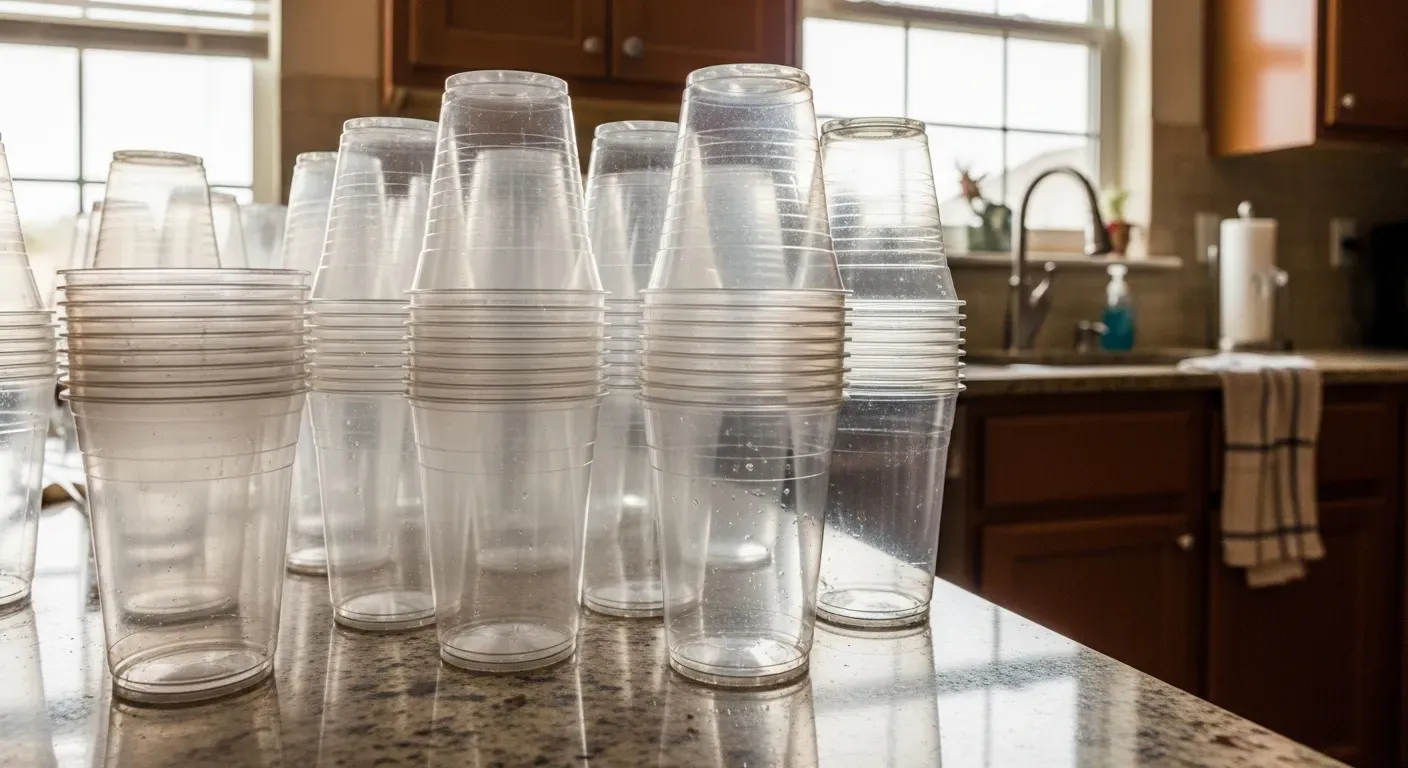
Plastic Cup Market Trends and Business Prospects in Indonesia
What Is the Current Market Dynamic for Plastic Cups in Indonesia?
Indonesia’s plastic packaging industry records export value for HS 3924.10 (plastic tableware including cups) of around USD 800 million per year — making Indonesia one of the largest regional exporters in ASEAN. The domestic plastic packaging market is estimated at IDR 90 trillion, with the F&B segment growing 8–12% per year, faster than the broader industry’s 6–8%. These figures reflect real demand from restaurants, coffee shops, and catering operators across the country.
This growth is not temporary. The rapid expansion of culinary businesses, from MSMEs to major franchises, is the main engine of consistent demand for plastic cup packaging. These F&B segments rely on practical packaging for take-away and delivery as part of daily operations.
On the international trade side, Indonesia benefits from AANZFTA, which provides zero tariffs for plastic packaging exports to Australia and New Zealand. This opens significant opportunities for food-grade manufacturers to enter premium export markets, including the markets Wingoh has served since 1992.
Competition in this segment includes around 250–400 active producers nationally, with 30–60 having export capability. Procurement buyers choosing a manufacturing partner need to consider capacity scale, food-grade certification, and export track record as key differentiators.
Sourcing for a specific volume? Browse our food-grade injection cup range or request a quotation from the Wingoh team for spec, MOQ, and lead-time details.
Demand for different plastic cup types is also becoming more specific. Buyers look not only for functionality, but also for chemical migration compliance and custom logo printing for restaurant or franchise branding needs.
With transaction volume increasing and price competition tightening, the ability to offer competitive prices without compromising quality is a key differentiator in Indonesia’s plastic packaging industry.
7 Major Trends Shaping the Plastic Cup Business Landscape in Indonesia
The Indonesian plastic cup packaging market is dynamic and fast-moving. Several major trends are shaping where the business goes next.
Players in the plastic packaging industry need to understand these trends to remain relevant and competitive.
- Rising Demand for Environmentally Friendly Packaging: Corporate buyers and F&B chains increasingly require recyclable or biodegradable packaging. This is both a challenge and an opportunity for plastic cup manufacturers to innovate with mono-layer PP or rPET materials.
- Stronger Personalization and Branding: Many F&B businesses, especially cafés and franchises, require cups with specific logos or designs. Custom printing capability is becoming a more important feature in procurement tenders.
- Booming Food and Beverage Delivery: Since the pandemic, delivery services have surged and remained stable. This increases the need for cup packaging that is secure, spill-resistant, and durable in delivery logistics.
- Focus on Hygiene and Safety: B2B buyer hygiene standards are rising. Sealed cups or individually packed packaging are added value for catering operators and hospitals.
- Cost Efficiency and Quality: Buyers always seek low total cost of ownership. Competitive pricing without compromising food quality requires innovation in production-process efficiency.
- More Diverse Sizes and Shapes: Demand for cups with specific dimensions — matched to beverage type or portion size — is increasingly common in RFQs from major restaurant chains.
- Production Technology Innovation: Producers continue investing in multi-cavity injection molding machines and servo-electric systems to reduce cycle time and energy cost, maintaining export price competitiveness.
Complete Guide to Plastic Cup Types: Choosing the Right Option for Procurement
After understanding the trends, procurement teams need to know which plastic cup types are available in the Indonesian market. The right material choice determines application fit, unit cost, and food-safety compliance.
Each type has different technical characteristics:
- PP Plastic Cups (Polypropylene): Food-grade PP resin code #5 is the dominant choice for hot and cold beverages. It resists temperatures up to 100–120°C and is flexible for machine-seal applications. Manufacturers such as Wingoh have produced PP cups since 1992 for F&B and export segments.
- PET Plastic Cups (Polyethylene Terephthalate): Strong in optical clarity and structural rigidity. The main choice for clear cold drinks such as juice, iced milk coffee, or boba beverages that rely on visual presentation.
- PS Plastic Cups (Polystyrene): More rigid with a lower unit price. Used for snack packaging or room-temperature applications that do not require thermal resistance.
- PLA Plastic Cups (Polylactic Acid): A corn-starch-based material that decomposes in industrial composting facilities. An option for buyers requiring an eco-claim in packaging procurement.
The right plastic cup packaging type is not only about unit price. Consider product specifications — filling temperature, seal strength, chemical migration regulation, and export labeling requirements. Consult Wingoh’s team directly for material recommendations and volume quotations.
Addressing Environmental Challenges: Innovative Solutions and Sustainable Plastic Cup Regulation
Environmental issues are a major concern in packaging, including Indonesia’s plastic cup industry. Regulatory pressure from the central government — including Ministry of Environment and Forestry rules on reducing plastic waste — and single-use plastic bans in several regions are driving real change.
Qualified producers respond through several approaches:
- Plastic Cups with Recycled Content: Some plastic cup manufacturers are starting to integrate rPP or rPET as part of their raw material. This reduces dependence on virgin resin and lowers production carbon footprint.
- Compostable Plastic Cups: PLA-based or certified starch-blend cups for industrial composting facilities. Relevant for buyers in the eco-premium segment or those operating in areas with strict regulation.
- Take-Back and Recycling Initiatives: Collaboration programs among producers, distributors, and waste banks for post-use cup collection, supporting government circular-economy targets.
For procurement buyers, producer compliance with these standards — including material traceability and certification documentation — is increasingly part of vendor qualification criteria, especially for export contracts to Australia, Europe, or multinational F&B chains.
As a Tangerang manufacturer running injection molding since 1992 with FSSC 22000 and ISO 9001 certification, Wingoh conducts regular FSSC 22000 audits, ensuring the full production chain — from food-grade PP resin selection to packaging — meets food-safety standards and is traceable for buyer audits. Compliance is benchmarked against the official SNI standard maintained by Indonesia’s national standardization agency.
How Can You Get the Best Plastic Cup Supplier at a Competitive Price?
Finding the right plastic cup packaging supplier is crucial for F&B businesses and distributors. In this segment, choosing the wrong production partner directly affects product quality, supply consistency, and total procurement cost.
Several criteria must be included in the vendor-evaluation checklist:
- Product Quality and Certification: Make sure cups meet relevant food-grade standards — SNI, FSSC 22000, or FDA for export needs. Certification is proof of a verified QC system, not just a claim.
- Price and Volume Structure: Compare prices from several producers based on volume commitment. Annual-volume negotiation generally provides better leverage than spot purchasing.
- Supply Reliability and Lead Time: Production capacity, buffer stock availability, and on-time delivery directly affect the buyer’s supply chain.
- Minimum Order Quantity (MOQ): Match MOQ to your business ordering cycle. Producers with flexible batch size are more suitable for buyers still building volume.
- Responsiveness and After-Sales: A supplier responsive to technical inquiries, quality complaints, or logo customization needs is a long-term partner, not merely a transactional vendor.
To get the best offer from a certified food-grade plastic cup manufacturer, involve Wingoh’s technical team from the product-specification stage — including dimensional tolerance, wall thickness, and seal requirements.
Opportunities in the Cup Packaging Market: Strategies for Buyers and Distributors
The scale of Indonesia’s plastic cup packaging industry — USD 800 million in annual HS 3924 exports and 8–12% domestic F&B growth — shows that long-term demand remains solid. For corporate buyers, distributors, and importers, several strategies are relevant:
For Corporate Buyers and F&B Chains
- Technical-Specification-Based Tenders: Include SNI requirements, chemical migration limits, and food-grade provisions in the RFQ. This filters vendors by real capability, not just the lowest price.
- Long-Term Partnerships: Annual volume commitments provide much better price leverage than spot purchases. Manufacturers such as Wingoh offer annual contract schemes for buyers with consistent needs.
- Customization as Differentiation: Logo-printed or special-color cups strengthen brand identity at the point of sale. Producers with in-house printing capability shorten lead time and reduce coordination cost.
For Distributors and Importers
- Diversify Product Lines: Beyond standard cups, add thinwall containers or jars to expand category coverage for retail and catering buyers.
- Use AANZFTA: Distributors supplying Australia and New Zealand can use zero tariffs for Indonesian-origin products, improving price competitiveness versus non-ASEAN competitors.
- Focus on Sustainability: Export-market buyers increasingly require eco-compliance. Distributors that proactively offer rPET or PLA options can access faster-growing premium segments.
To understand more about plastic cup production efficiency and quality standards applied by manufacturers, see related articles in our production and QC clusters.
Frequently Asked Questions
- How are Indonesian plastic cup manufacturers adapting to environmental regulation?
- Through four strategies: R&D into alternative materials (PLA, rPET, mono-material PP), production-process optimization to reduce waste, internal factory recycling systems, and B2B customer education on disposal. SNI compliance and regional rules such as single-use plastic restrictions are now baseline requirements — Wingoh implements these through its FSSC 22000 audit discipline.
- Besides PP and PET, what materials are promising for cups in the Indonesian market?
- PLA from corn starch is promising for the eco-premium segment because it biodegrades in industrial composting facilities. rPET is also being promoted for circular-economy programs. PS and PE are still used for specific applications, but regulatory trends are pushing choices toward materials that are easier to recycle.
- What are the main challenges for new entrants in Indonesia's plastic cup market?
- Four challenges: initial capital investment of IDR 5-20 billion for modern injection molding machinery, competition from established producers with economies of scale since the 1990s (Wingoh since 1992), global PP resin price fluctuations that can swing 15-25% per year, and increasingly strict SNI compliance. Brand recognition and B2B distribution take 3-5 years to build.
- Which business sectors are the main demand drivers for plastic cups in Indonesia?
- F&B is the dominant driver: specialty coffee shops, boba drink franchises, quick-service restaurants, and culinary MSMEs focused on take-away. Packaged beverage industries also contribute significant volume for in-house cup categories. Event organizers and catering are secondary sectors with high seasonal volume.